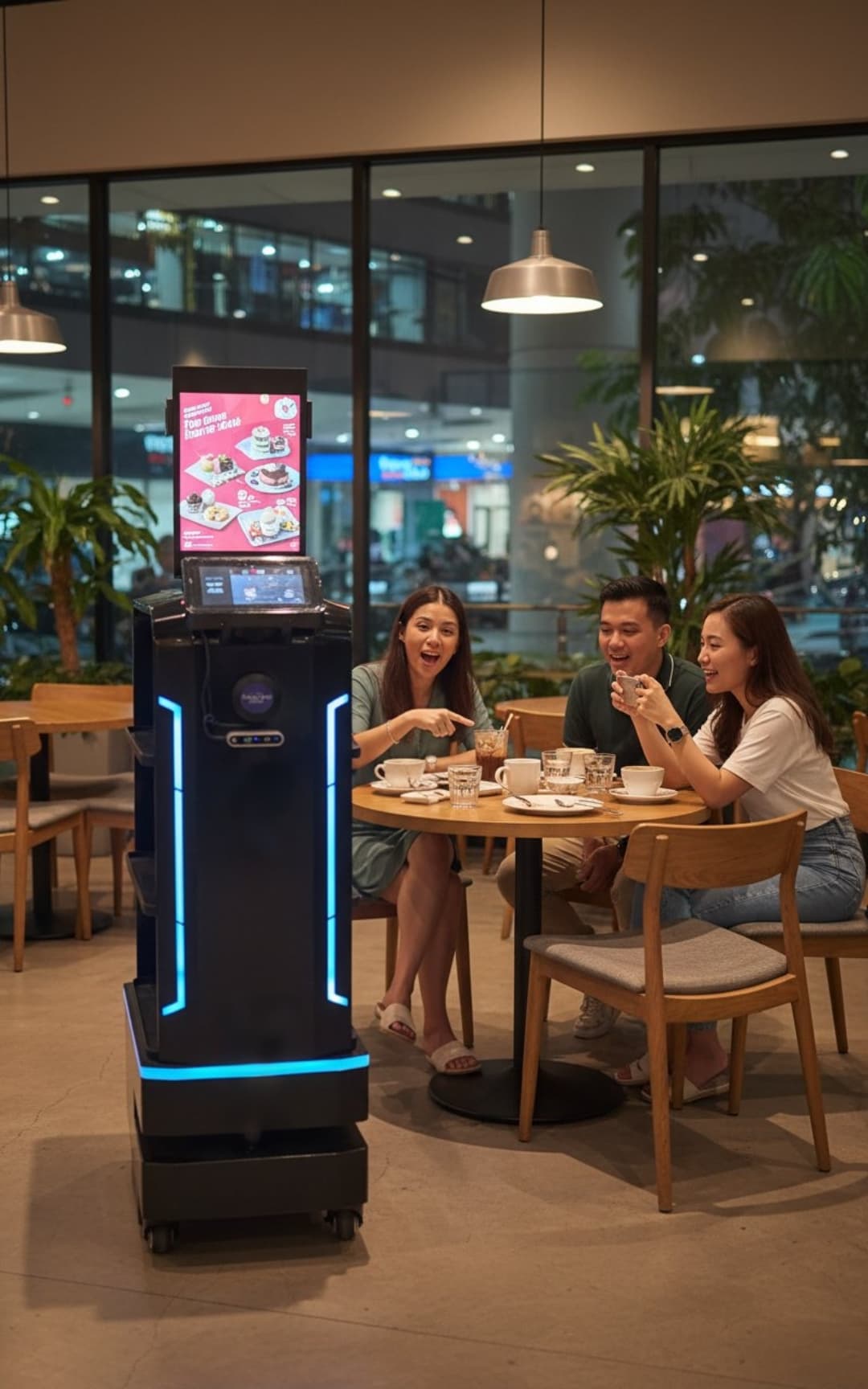
Every table that walks in has two numbers attached: what they planned to spend and what they actually spend. The gap between those numbers is your upselling opportunity.
The catch? Push too hard and you lose the customer. A server who rattles off add-ons like a telemarketer makes people defensive. But a server who mentions the fresh lychee iced tea at the right moment? That's just good hospitality.
Here's what actually works, based on how Malaysian F&B operators are doing it today.
What is restaurant upselling?
Restaurant upselling means getting customers to order more, or order something with a better margin, by making a suggestion they're glad they heard.
A customer who didn't know you had a seasonal dessert special isn't being manipulated when you mention it. They just didn't know. The line between helpful and pushy comes down to one thing: are you suggesting based on what the customer wants, or what you want to sell?
Upselling is also one of the cheapest ways to grow revenue. You're not spending more on marketing or hiring more staff. You're getting more out of the customers already sitting in your restaurant.
How do you upsell without being pushy?
To upsell without being pushy, suggest one item that fits what the customer already chose, say it at a natural moment, and stop the moment they say no. Customers feel pushed when the offer is random, repeated, or badly timed, not when it is useful.
Five simple rules:
- One suggestion, not a list. "Our lychee iced tea goes well with that" works. Reading out five add-ons does not.
- Match it to the order. Suggest a drink with a spicy dish, or a dessert to a table that is finishing its mains.
- Pick the moment. Ask when the customer is deciding or finishing, not while they are mid-conversation.
- Take no for an answer. Never ask twice. A polite "no problem" keeps the customer relaxed.
- Say why it is worth it. "It is only here this month" or "most people share one" gives a reason, not pressure.
1. Menu engineering: your menu is doing half the work
Most upselling happens before anyone opens their mouth. It happens when the customer reads the menu.
Anchor pricing
Place your high-margin items next to your most expensive item. When a customer sees a dish at RM 55 followed by one at RM 32, the RM 32 option feels like a reasonable choice rather than an extravagance. The anchor creates a reference point that makes mid-range items look attractive.
Visual hierarchy
The top-right corner of a menu, or the first item in a category, is where the eye goes first. Put your high-margin items there, not your cheapest options. Many restaurants inadvertently lead with low-margin items out of habit or menu inertia.
Descriptive language
Menus that describe dishes in sensory terms ("slow-braised until tender," "served with house-made sambal," "finished with a squeeze of calamansi") consistently outperform menus that simply list ingredients. Customers who can picture the dish are more likely to choose it, and more likely to add accompaniments.
Strategic add-on placement
If you want customers to add a side dish, a premium topping, or an extra drink, that option needs to be visible at the moment of decision: either on the menu page adjacent to the relevant dish, or verbally suggested when the order is taken. Hidden add-ons that require customers to hunt for them don't get ordered.
2. Staff training: what your servers say (and when)
A well-timed suggestion from a server who actually likes the dish will outsell any menu trick.
Know the menu cold
A server who doesn't know what's in a dish can't upsell it confidently. Staff training should include tasting sessions, ingredient walkthroughs, and regular updates when the menu changes. When a server says "honestly, the nasi lemak ayam rendang is my favourite, the sambal is made fresh every morning" with genuine conviction, that recommendation converts.
Suggest instead of ask
"Would you like any drinks?" produces yes/no responses. "We have a fresh lychee iced tea today, it pairs really well with the spicy dishes" is a specific suggestion that gives the customer something to consider. Teach your team to lead with specific recommendations, not open-ended questions.
Timing matters
Upsell opportunities are not all equal. The window when a customer is reading the menu is the best time to suggest dishes. The end of a main course (when dessert upselling should happen) is a second window. Suggesting add-ons mid-meal when customers are already eating is awkward and rarely converts.
Read the table
Upselling works when it reads correctly. A table of four on a quick work lunch doesn't want to be talked through the full dessert menu. A couple celebrating a birthday is genuinely open to a recommendation for something special. Train your team to read table dynamics and adjust their approach.
Suggest once and move on
A suggestion made, acknowledged, and declined should not be repeated. One warm, genuine recommendation is upselling. Asking twice is pressure. Teach your team the difference clearly: offer once with genuine enthusiasm, accept the answer gracefully, and move on.
3. Dessert upselling: the highest-margin opportunity
Desserts are typically among the highest-margin items on any menu, and also the most commonly skipped. By the end of a meal, customers are often full, tired, and ready to ask for the bill.
The single most effective thing you can do for dessert upselling is timing: bring the dessert menu, or verbally suggest dessert options, before customers have mentally checked out. Ideally, this happens when plates are being cleared, not after they've been sitting with an empty table for three minutes.
A dessert display near the entrance or at the counter can also help. Visible options that customers see when they arrive plant a seed for dessert consideration later.
Some restaurants offer a shared dessert as a low-commitment option: "We have a matcha panna cotta today that's great for sharing, would you like to take a look at the dessert menu?" This removes the commitment-to-finish-a-whole-dessert concern and often converts tables that would otherwise have skipped entirely.
4. Drinks and beverage upselling
Beverages are consistently one of the highest-margin categories in F&B, yet many restaurants treat their drinks menu as an afterthought.
Offer specific pairings. Instead of "anything to drink?", try "we have a really good bandung fresh today, a lot of people find it balances the richness of the curry." Specific pairing suggestions tied to what the customer has already ordered convert much better than generic offers.
Make premium visible. If you have a premium version of a popular drink (fresh-squeezed juice vs. bottled, specialty coffee vs. standard drip), price the premium version visibly next to the standard option and train your team to mention it naturally.
For long-stay tables, a simple "would anyone like another drink?" at the right moment costs nothing and often adds a round to the check.
5. Technology-assisted upselling
Here's something I've noticed watching restaurants during Friday dinner rush: upselling is the first thing that gets dropped. When your team is handling six tables at once, nobody's mentioning the dessert special.
That's the one thing technology does better than humans. It doesn't forget. It suggests the same high-margin items on the 50th delivery as it did on the first, whether the restaurant is dead or slammed.
Digital menu boards and tablet ordering
Restaurants using digital menu boards or tablet ordering can implement algorithmic upselling: prompts that appear during the ordering flow suggesting specific add-ons based on what the customer is already ordering. These work particularly well in quick-service and counter-service formats where there's limited server interaction.
Food delivery robot upselling
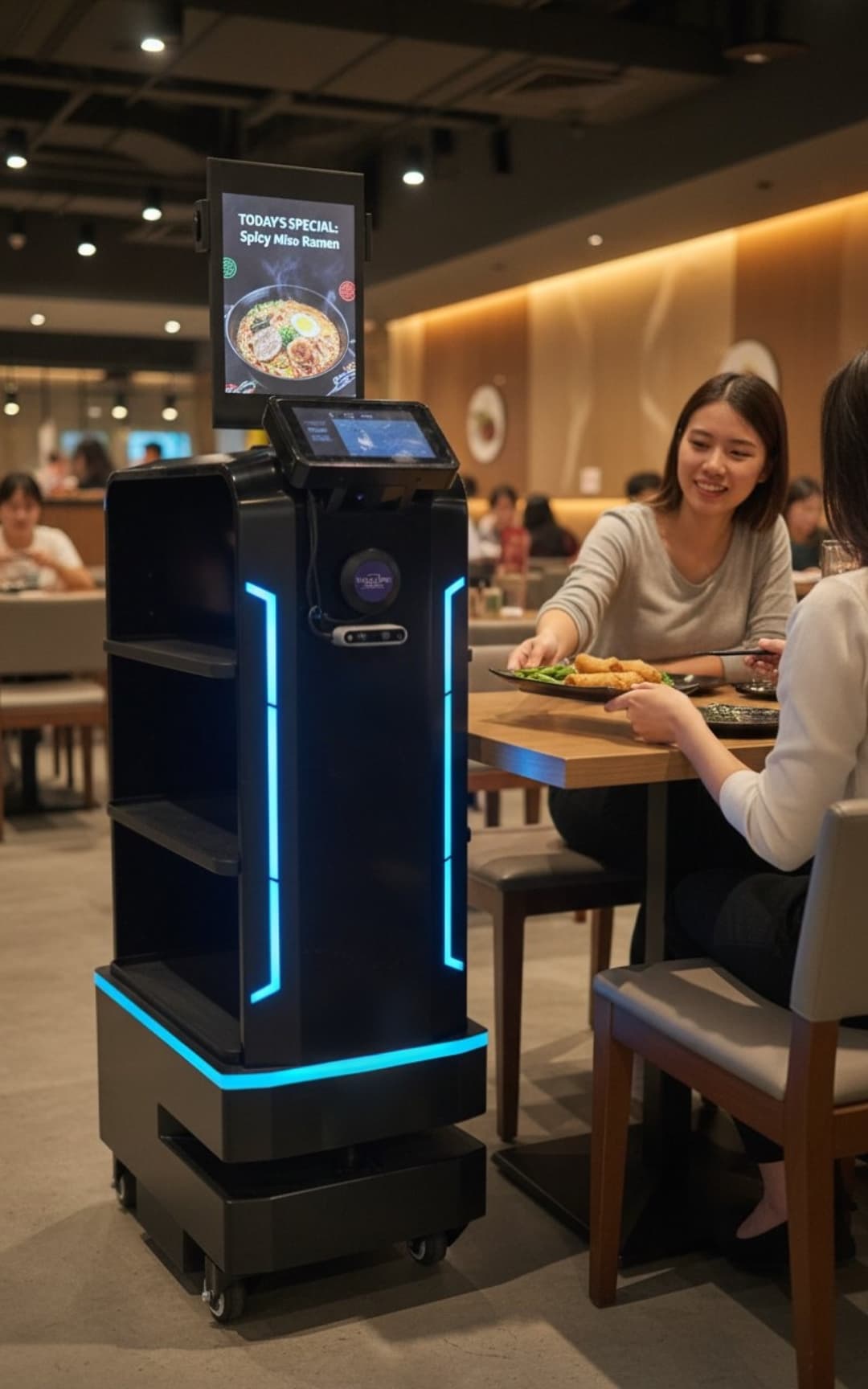
Some food delivery robots can upsell while they deliver. The FL1 by FoodLink System does this with what they call a Cognitive Upselling Engine. When it arrives at a table with food, it suggests desserts, seasonal specials, or premium drinks on its 10.1" touchscreen while saying the recommendation out loud.
The timing is what makes it work. Food is arriving, the customer is happy, and a visual suggestion pops up right in front of them. That's a much better moment than trying to pitch dessert after they've been staring at empty plates for five minutes.
More details on how this works in practice are on the FL1 product page and why restaurants choose FoodLink System.
6. Building an upselling culture
Tactics are one thing. Getting your whole team to do this consistently is another.
Track it. Compare average transaction value per server per shift. If one server is consistently 20% higher, figure out what they're doing differently and teach the rest of the team.
Incentivise it carefully. Small bonuses for highest average spend can work, but watch for side effects. You don't want servers cherry-picking tables or being pushy to hit a target.
Brief on it daily. Before every service: what's the high-margin special? What pairs with it? What dessert are we pushing tonight? If your team isn't thinking about upselling before service starts, they won't do it during.
Frame it as hospitality, not sales. A customer who ordered the dry version of a dish but would have preferred the curry version if someone had mentioned it didn't just miss an upsell. They had a worse meal than they needed to. When your team sees upselling as helping people eat better, they actually want to do it.
If you're considering whether automation could support your upselling approach, reach out to us for an honest conversation about what makes sense for your restaurant's setup.
Frequently Asked Questions
Q: What's a realistic target for upselling as a percentage of revenue?
Depends on your format and price point. A more useful metric: track your average transaction value per table over time. If it's going up, your upselling is working. Most operators who get serious about this see movement within a few months.
Q: Does upselling work in budget and mid-range restaurants, or only in fine dining?
Upselling works across price segments. The techniques just adapt. In a budget kopitiam, upselling might be "do you want to add a soft-boiled egg?" or "we have fresh coconut water today." In a mid-range cafe, it's seasonal specials and premium drink pairings. The principle of suggesting the right thing at the right moment applies everywhere.
Q: How do I upsell without making customers feel pressured?
Suggest once, with genuine enthusiasm, and accept the answer. Never repeat a declined suggestion. Make specific, informed recommendations rather than open-ended questions. Read the table's mood and pace. When upselling feels like helpful information rather than a sales pitch, customers don't feel pressured. They feel looked after.
Q: Should I train all staff to upsell, or only servers?
All customer-facing staff can contribute to upselling: counter staff, cashiers, even the person who hands over takeaway orders. The specific opportunities and techniques differ by role, but the principle of making relevant suggestions applies wherever there's customer contact.
Q: How does AI-assisted upselling compare to staff upselling?
They complement rather than substitute for each other. AI-assisted upselling (via robots or digital prompts) has the advantage of consistency. It never forgets to suggest, regardless of service load. Staff upselling has the advantage of warmth and adaptability: an experienced server reads the table in ways technology currently can't. The best approach for high-volume restaurants is usually both: consistent technology-driven prompting backed up by trained human follow-through.